
The Psychologist Friend’s Chosen Life
The FriendThis flow traces the psychologist friend’s departure from literary ambition toward therapy work, private writing, and a different account of meaningful labor.
increasing Bearing strength in each event
 decreasing
Bearing strength in each eventdecreasingEarly Literary Promise

Early Literary Promise
Recognition as a young writer
The Narrator’s college friend publishes stories in respected small magazines, wins a prize, and receives a major award for promising young writers. She appears to be moving toward a literary career.
A path not pursued
Her eventual change is not a dramatic public renunciation. She says that concentration faltered and that meditation gradually made the ambitions of literary success feel incompatible with the life she wanted.
A Retreat and a Doubt
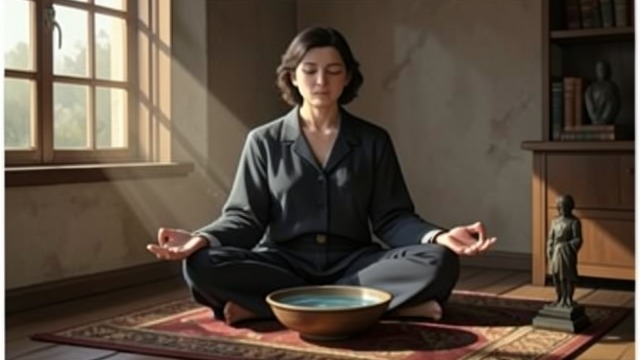
A Retreat and a Doubt
Learning to sit still
The friend attends a meditation retreat and finds that Buddhist practice conflicts with ambition, competition, and the desire to surpass other writers. She questions the drive required for a literary career.
A considered tradeoff
She does not say writing itself is worthless. Rather, the professional identity and attachments surrounding publication seem to pull against the freedom from ambition she hopes to cultivate.
Work in Trauma Care

Work in Trauma Care
A new profession
The friend becomes a psychologist and spends years working at a treatment center for victims of human trafficking. She encounters survivors whose injuries can include mutism, blindness, and other psychosomatic symptoms.
A different use of attention
Her work is not presented as a substitute for literature. It gives her a daily role in supporting people whose immediate needs exceed what stories or artistic ambition can provide.
Private Poems
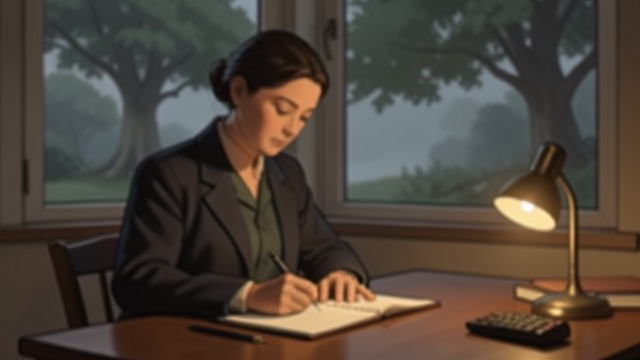
Private Poems
Writing without a career
The psychologist friend still journals and writes poetry, often about nature. She keeps the poems private and likens the practice to prayer rather than publication.
A changed purpose
Writing remains useful to her, but it no longer has to produce a book or public recognition. Her choice complicates the Narrator’s assumption that writing must aim toward literary success.
A Workshop for Survivors

A Workshop for Survivors
Creating a safe space
The psychologist friend invites the Narrator to lead a workshop for women at the treatment center. She sets boundaries around private journals and asks the instructor to overlook spelling and grammar.
Care beyond publication
The friend’s commitment centers safety and agency, not material for a book. Her professional life offers a practical counterpoint to the literary ambition the Narrator and Deceased Friend once treated as central.
Soon after college
During the years after college
The decade before the workshop invitation
When the Narrator asks about her writing
After the Narrator’s final conversation with the Deceased Friend
